The October CPI report came in hotter than expected. Headline CPI rose 0.4% month over month, above the 0.3% consensus cited before the release. Core CPI, excluding food and energy, rose 0.3%, versus a 0.2% consensus expectation.
What the report actually showed
According to the Bureau of Labor Statistics, shelter rose 0.3% in October and accounted for more than 30% of the monthly headline increase. Food rose 0.5%, energy rose 0.7%, and core CPI increased 0.3% for a third consecutive month.
The report did not include normal 12-month inflation comparisons for most series because October 2025 CPI data were unavailable following the 2025 lapse in appropriations. That makes the month-over-month details and category breadth especially important for interpreting this release.
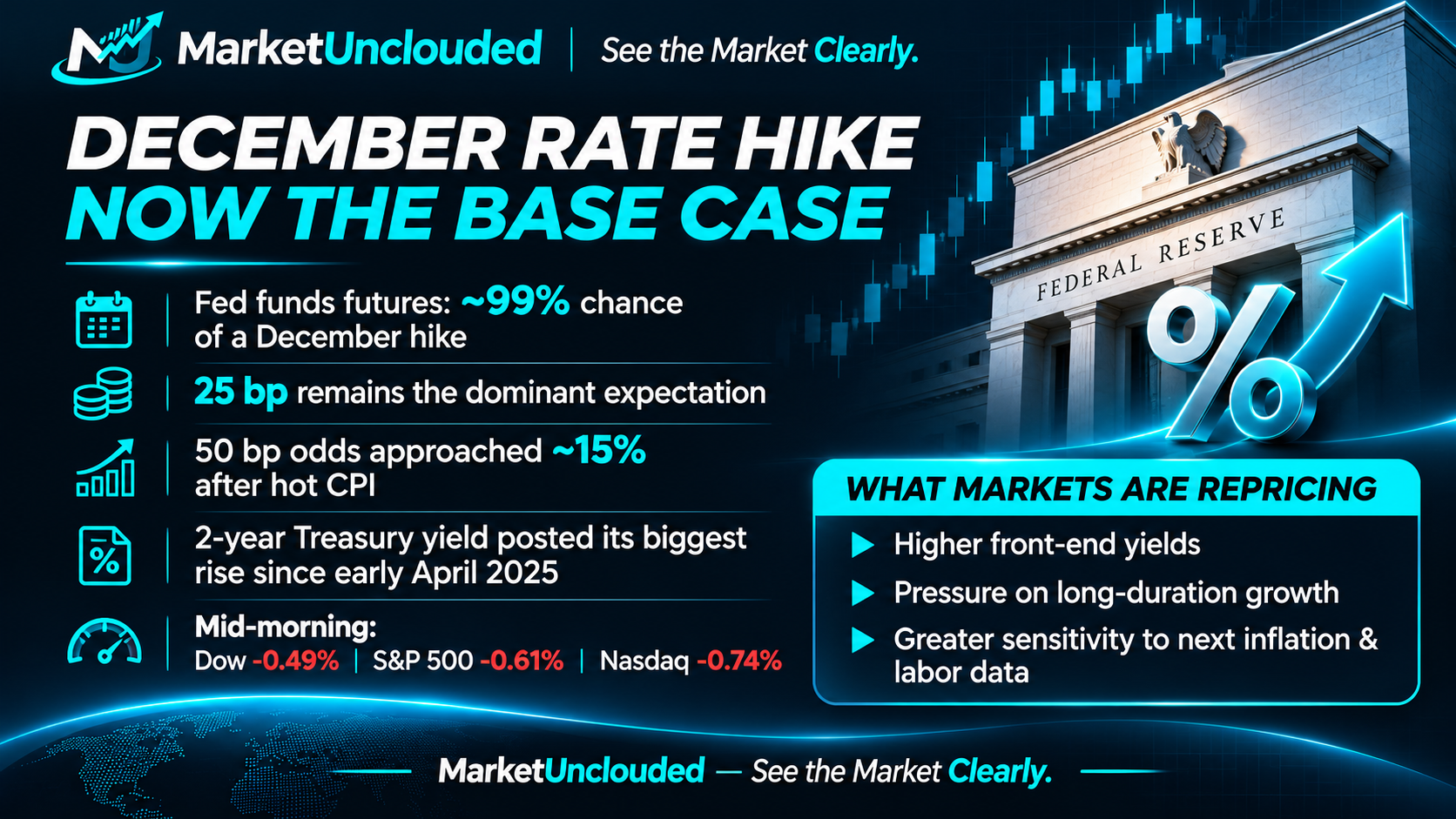
Why the December Fed decision just became more difficult
Before the release, one plausible case for easier policy was that inflation could continue cooling while the Fed watched for signs of future labor-market weakness. Today’s inflation data pushes in the opposite direction.
Fed Governor Christopher Waller said Tuesday that he plans to support at least a quarter-point rate increase in December. Reuters also reported that markets moved to price a very high probability of a December hike after the CPI release.
What about the labor market?
The labor picture still matters. Recent employment data have shown resilience, while consumer surveys have reflected increased concern about future unemployment. That distinction is important: current labor conditions are not the same thing as expectations about where conditions may be headed.
If inflation remains broad while employment stays reasonably firm, the Fed has more room to prioritize price stability. If labor data deteriorate sharply before the December meeting, policymakers would face a more difficult trade-off.
Three scenarios from here
1. Inflation stays firm and labor remains resilient
This would strengthen the case for a December rate increase. The market would likely stay highly sensitive to Treasury yields, rate-sensitive growth stocks, and financial conditions.
2. Inflation is hot now, but November data cool materially
One report does not determine policy by itself. A softer November inflation report, combined with weaker labor data or tighter financial conditions, could complicate the case for a hike.
3. Inflation broadens further
If shelter and service categories remain firm while energy and goods pressures also persist, the policy debate could shift from whether the Fed tightens in December to how long restrictive policy needs to remain in place.
What we are watching in markets
- Treasury yields: whether the post-CPI move persists rather than fades.
- S&P 500 and Nasdaq breadth: whether weakness is broad or concentrated in rate-sensitive groups.
- Small caps and financials: useful gauges of how tighter-rate expectations affect domestic cyclicals.
- Volatility: whether implied volatility confirms a sustained repricing of policy risk.
- Fed communication: especially whether other officials echo Waller’s concern about inflation breadth.
U.S. Bureau of Labor Statistics — Consumer Price Index, October 2026
Reuters — U.S. consumer prices rise above expectations in October
Reuters — Fed's Waller plans to support at least a quarter-point rate hike in December
Educational content only. This article is general market commentary, not personalized investment advice.