
The numbers
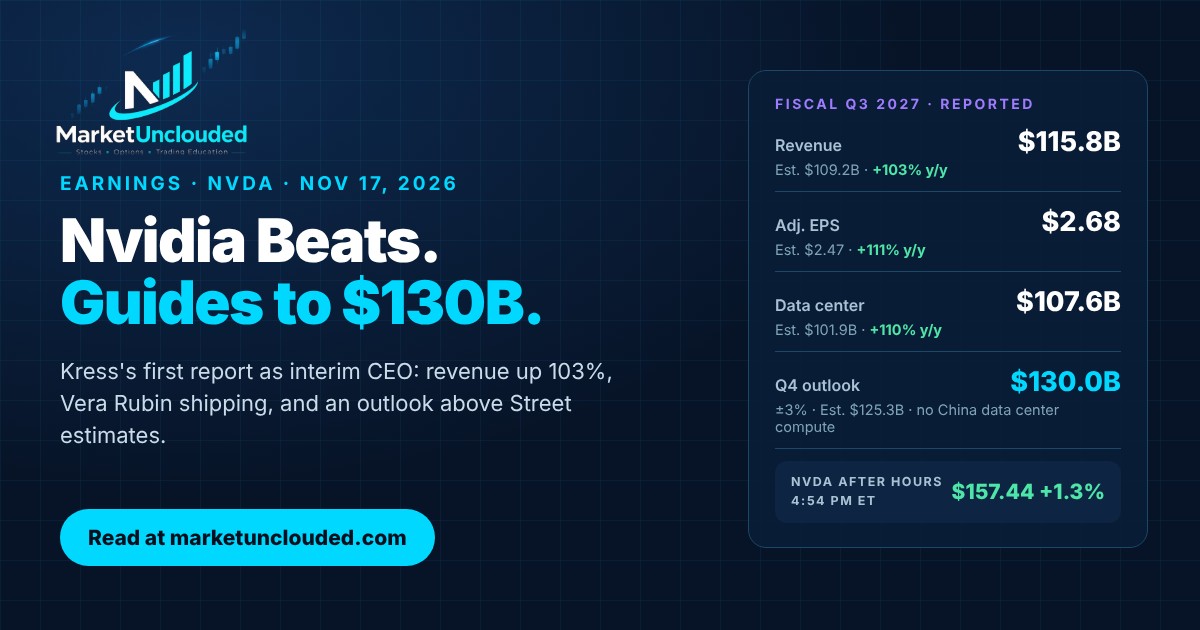
| Fiscal Q3 2027 | Reported | Estimate | vs. a year ago |
|---|---|---|---|
| Revenue | $115.8B | $109.2B | +103% |
| Adjusted EPS | $2.68 | $2.47 | +111% |
| GAAP EPS | $2.70 | — | +108% |
| Data center revenue | $107.6B | $101.9B | +110% |
| Edge computing revenue | $8.2B | $7.5B | +42% |
| Gross margin (adjusted) | 74.9% | — | — |
| Q4 revenue outlook | $130.0B ±3% | $125.3B | — |
| Q4 gross margin outlook | 71.0%–72.0% | — | — |
Revenue and EPS estimates are the Bloomberg consensus as reported by Yahoo Finance. Segment and outlook estimates are as reported by Yahoo Finance.
What stood out
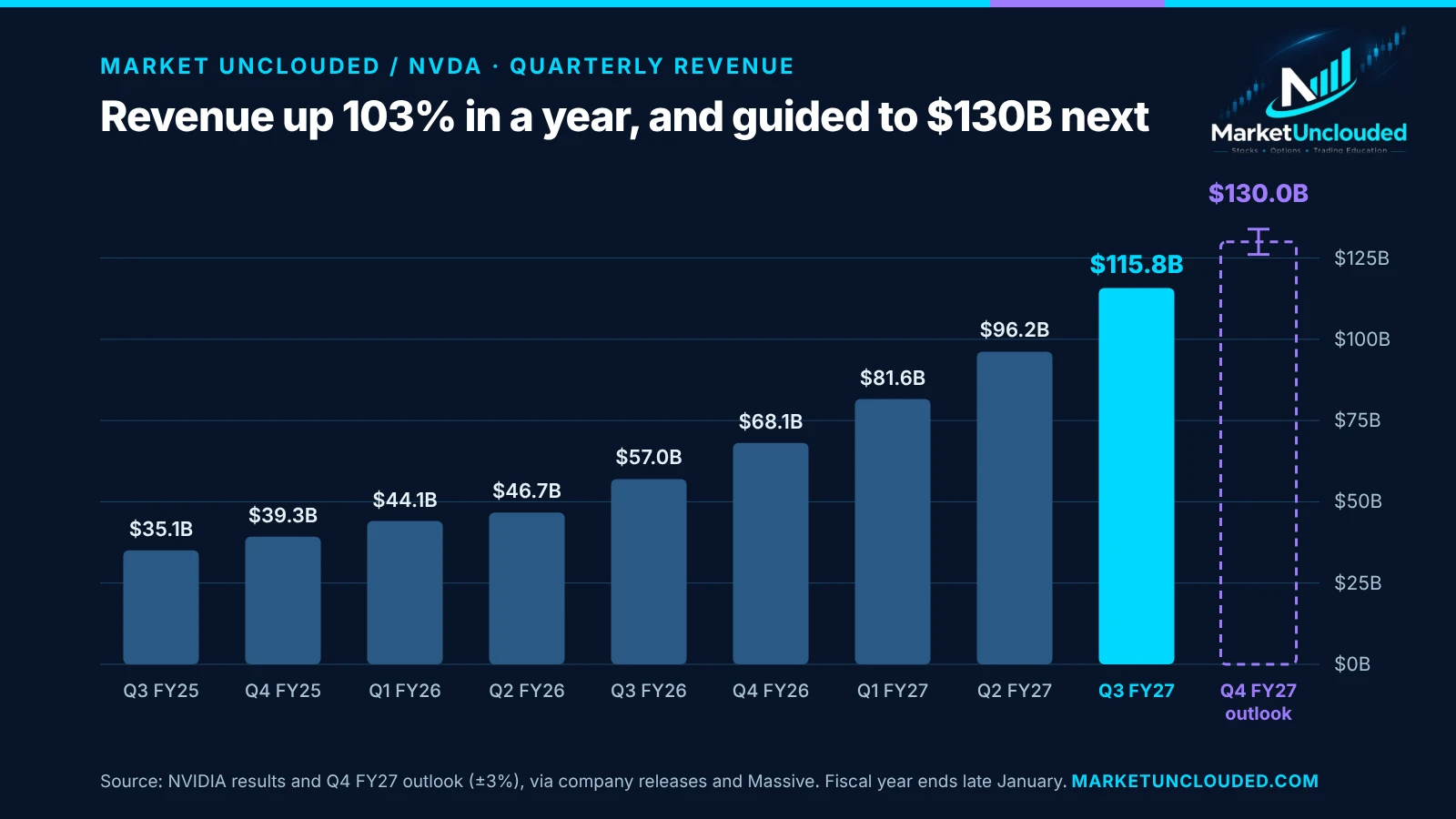
Growth sped up again. Revenue rose 20% from the prior quarter, up from about 18% growth the quarter before ($81.6 billion to $96.2 billion). For a company already this large, an acceleration is the detail that matters most, because the bear case going into the report was that AI spending was starting to level off.
Data center did almost all the work. The segment brought in $107.6 billion, 93% of total revenue. Nvidia now splits it into two customer groups. Hyperscalers contributed $60.1 billion, well ahead of the roughly $53.6 billion analysts expected. AI clouds, industrial and enterprise customers contributed $47.5 billion, a little below the $48.6 billion estimate. In other words, the beat came from the largest cloud companies.
Vera Rubin is shipping. Nvidia said its Vera Rubin NVL72 systems began shipping after production ramped, and called it the fastest product ramp in its history. It named CoreWeave, Google Cloud, Microsoft Azure, Oracle Cloud Infrastructure and Nebius among the partners running the racks. Product timing was one of the open questions after the leadership change, so this was the line investors were looking for.
The outlook leaves China out. The $130 billion Q4 forecast assumes no data center compute revenue from China. Any approved sales there would come on top of the forecast. Lower margins are a different matter (see below).
What the numbers don't answer
- Who runs Nvidia next. Jensen Huang resigned as CEO on November 12. Colette Kress is interim CEO and still CFO, and the release refers to an ongoing search without naming a candidate. Her statement was brief: "Our momentum is real. NVIDIA is an exceptional technology leader, powered by the relentless innovation of our people."
- Why margins are stepping down. Adjusted gross margin was 74.9% this quarter. The Q4 outlook is 71% to 72%. The release does not explain the drop, so listen for the reason on the call. New product ramps often carry lower margins at first, but that is a general pattern, not something Nvidia has said here.
- How much buying power is left. Nvidia returned $28.1 billion to shareholders in the quarter through buybacks and dividends, and has about $227.3 billion left on its repurchase authorization after the board added $150 billion in September. The next dividend is $0.25 a share, payable December 23 to holders of record on December 2.
How the stock reacted
NVDA closed the regular session at $155.46, down 0.4%, after dropping as low as $150.33 in the morning. The stock came into the report about 30% below its October 21 close of $221.97, after the CEO turmoil and a wider sell-off in chip stocks.
The results came out at about 4:20 p.m. ET. Within minutes the stock traded as high as $161.70, up 4.0%. It then gave back more than half of that gain and was at $157.44, up 1.3%, as of 4:54 p.m. ET, ahead of the 5:00 p.m. call.
Update, 8:00 p.m. ET: The stock made back that pullback and more. It finished after-hours trading at about $162.95, up 4.8% from the close, above the early $161.70 high. Source: Massive market data.
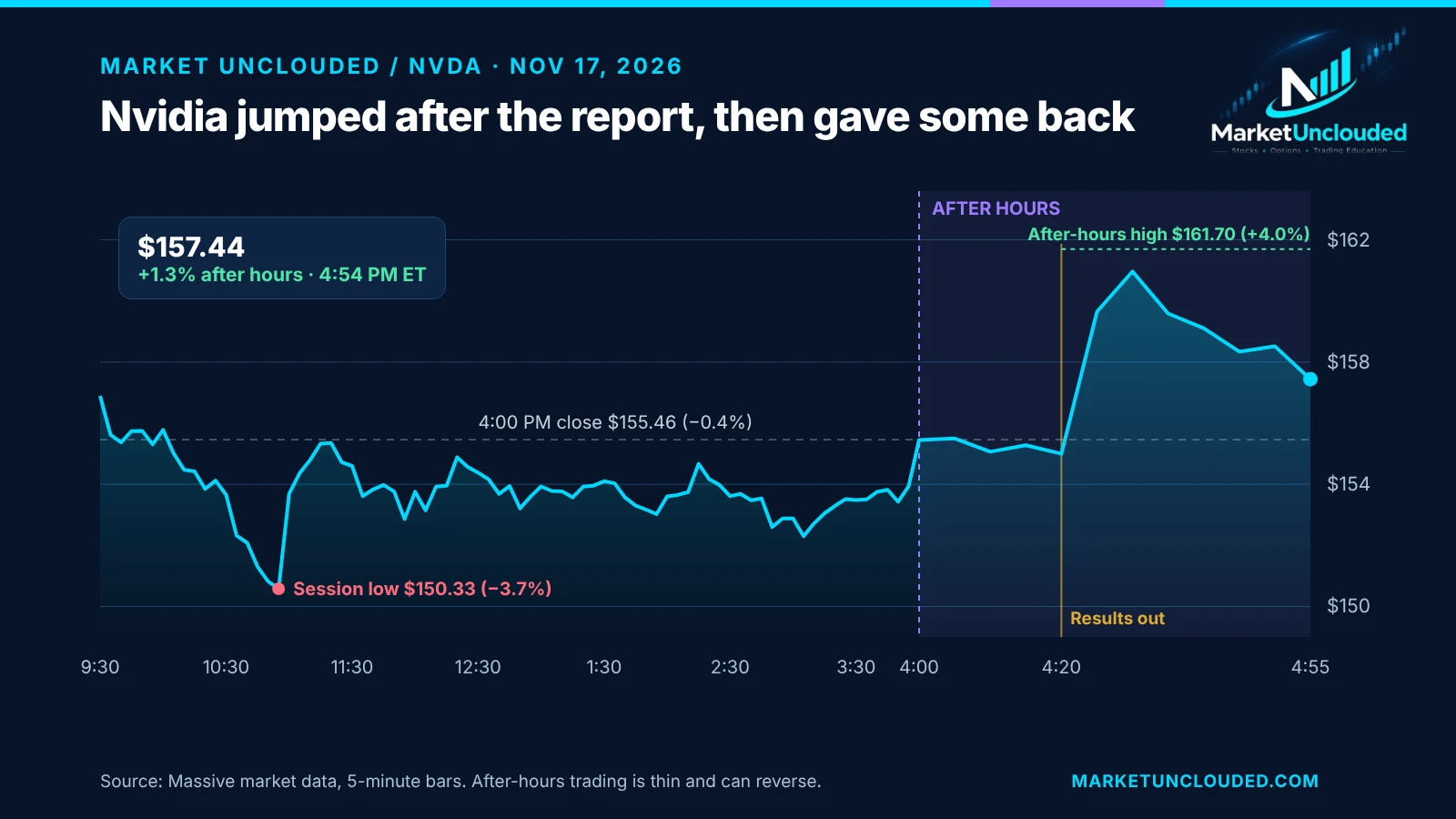
After-hours moves are a first reaction, not a verdict. Volume is a fraction of the regular session, and the call can change the picture. Our breakdown of last week's 13% gap-down reversal showed how far the opening move and the closing move can differ on a news day.
What to watch next
- The call. Kress hosts it at 5:00 p.m. ET. Listen for detail on the CEO search, the reason for the lower margin outlook, and whether the Vera Rubin ramp and customer orders are on the schedule Nvidia gave before the leadership change.
- Wednesday's open and first hour. Compare the premarket price with today's $155.46 close and the $162.95 after-hours finish. A gain that holds through the first hour of regular trading, with strong volume, tells you more than the after-hours print. See why confirmation matters more than the first move.
- The rest of the chip group. AMD, Broadcom, TSMC and the SMH semiconductor ETF sold off with Nvidia last week. If they rise with it tomorrow, investors are rethinking the whole AI spending cycle, not just one company's quarter.
- The rest of the week. The Fed's October meeting minutes are out Wednesday at 2:00 p.m. ET, and monthly options expire Friday. Heavy options positioning in chip stocks can make Nvidia's post-earnings move larger or longer than usual.
To see how far the options market is pricing NVDA to move, use our Expected Move tool or the Options Chain, which marks the expected move and key strikes.
Sources
- NVIDIA, November 17, 2026: results for the third quarter of fiscal 2027, Q4 outlook, capital returns and interim CEO statement.
- Yahoo Finance live coverage, November 17, 2026: consensus estimates and the hyperscaler / AI clouds revenue split.
- Full release text and tables via StockTitan: prior-quarter and year-ago comparisons.
- Massive market data: NVDA quarterly income statements, daily closes and 5-minute bars for November 17, 2026.
Options data for these tickers: NVDA · AMD · AVGO · SMH. Each page shows the expected move, max pain, gamma levels and options flow, updated through the trading day.